


Most people arrive with the wood already decided and treat the resin as a technical detail. It is the opposite way round. The species sets the warmth; the resin decides whether the table recedes into the room or becomes the thing everyone looks at.
Clear resin shows you the wood. Opaque resin shows you the shape. They are not variations of the same choice.
Crystal Clear
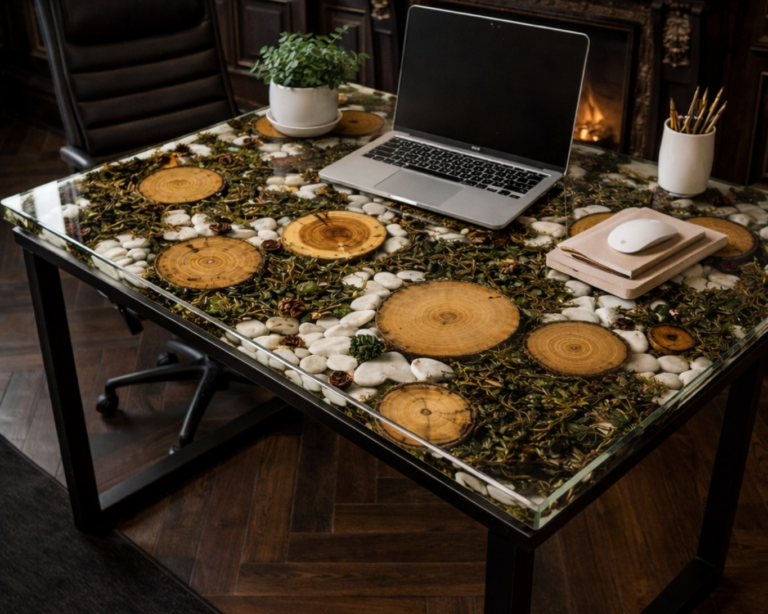
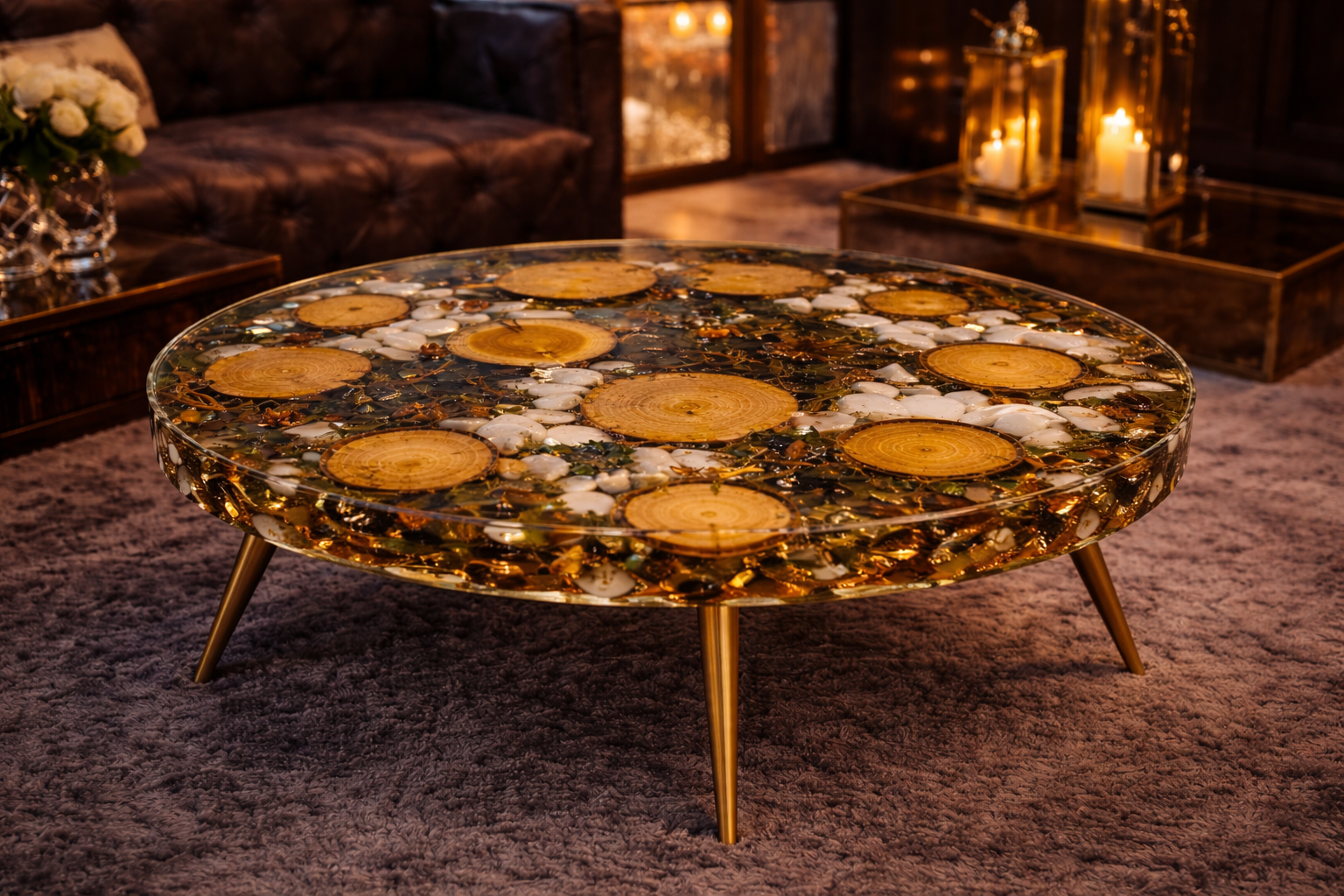
The default, and the hardest to execute. Transparent resin hides nothing: every bubble, every imperfectly sealed pore and every scratch left by a skipped sanding grit remains visible for the life of the piece. It is the finish that separates a careful workshop from a fast one.
In a room, clear resin behaves like water. It takes the colour of whatever is beneath and around it, which means the same table looks warm on an oak floor and cool against grey stone. It also carries light — the reason it is the only sensible choice if the piece will be illuminated from within, as in Luminous River.
Choose it when: the wood is the point, the room has good natural light, or the channel holds stones, moss or anything else meant to be seen.
Tinted Translucent
A small amount of pigment — enough to give the channel a colour without closing it. Blues and greens are the common request, because they complete the metaphor of a river, though a smoke grey is usually the more liveable choice in a European interior.
The risk here is dating the piece. A strong colour is a decision about the next twenty years of a room, and the tint cannot be changed afterwards. If you would not paint a wall that colour, do not put it in the middle of the table.
Choose it when: the wood is pale and needs contrast, or the room already has a settled palette the table should join.
Opaque White or Black
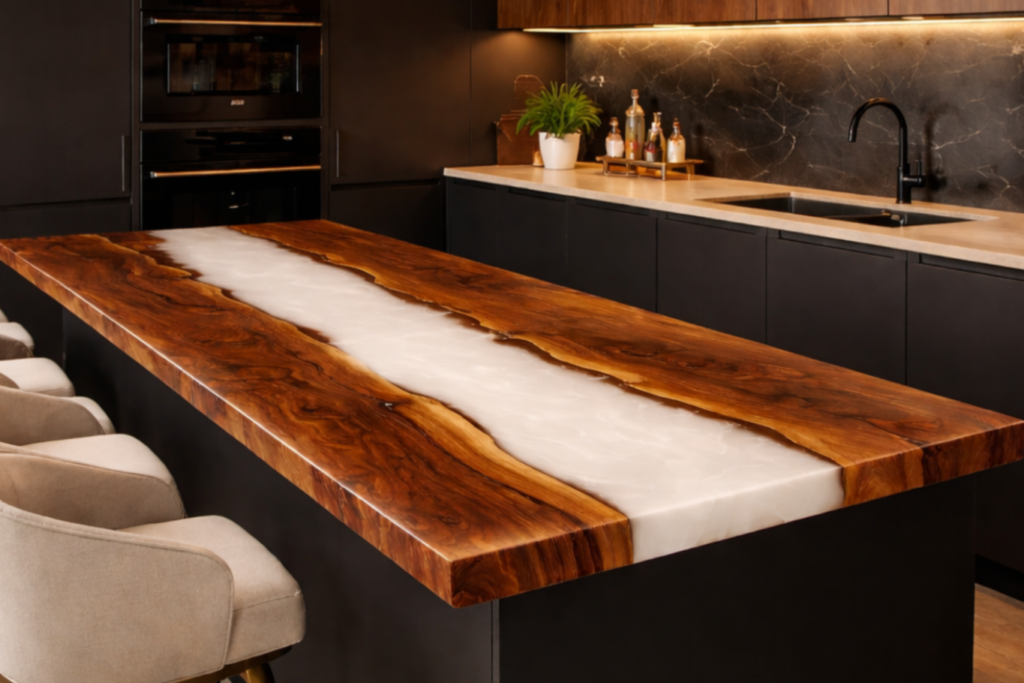
A solid pour reads as a second material rather than a filled void — stone set into wood, not liquid held between it. This is the most graphic option and the most forgiving one, because opacity hides the depth work that clear resin exposes.
Black narrows a table visually and suits dark floors and low light. White widens it and needs a room bright enough to justify the contrast. Both make the live edge the hero, since the contour is now a hard boundary between two flat colours rather than a soft transition. Ivory-toned work like Silent River sits at the quieter end of this range.
Choose it when: you want the outline of the wood to dominate, or the room needs a strong horizontal element.
Marble Effect
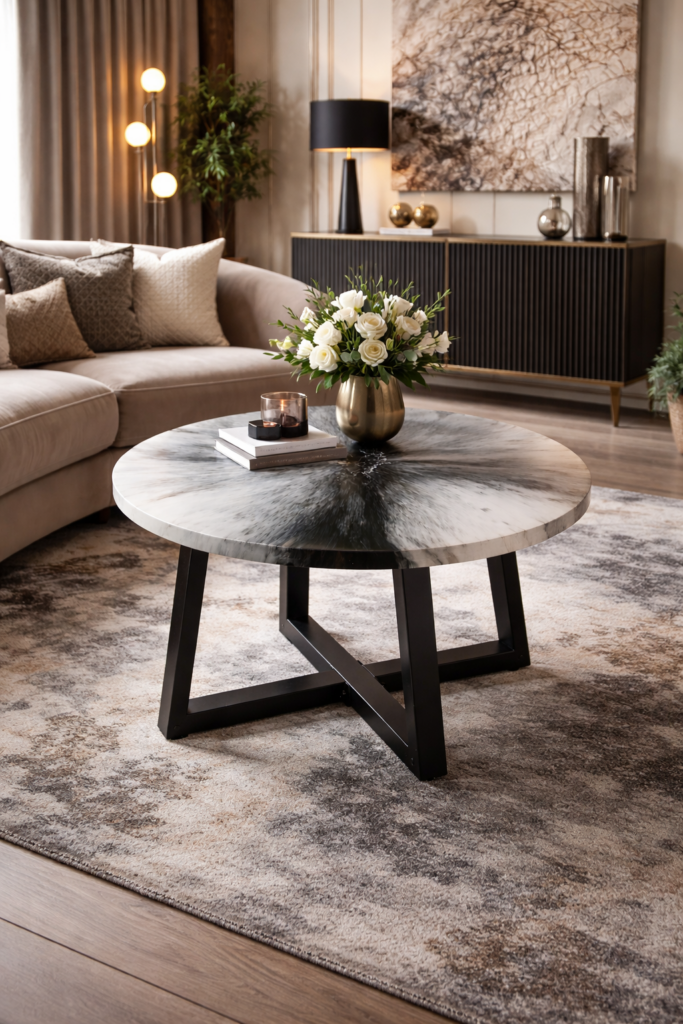
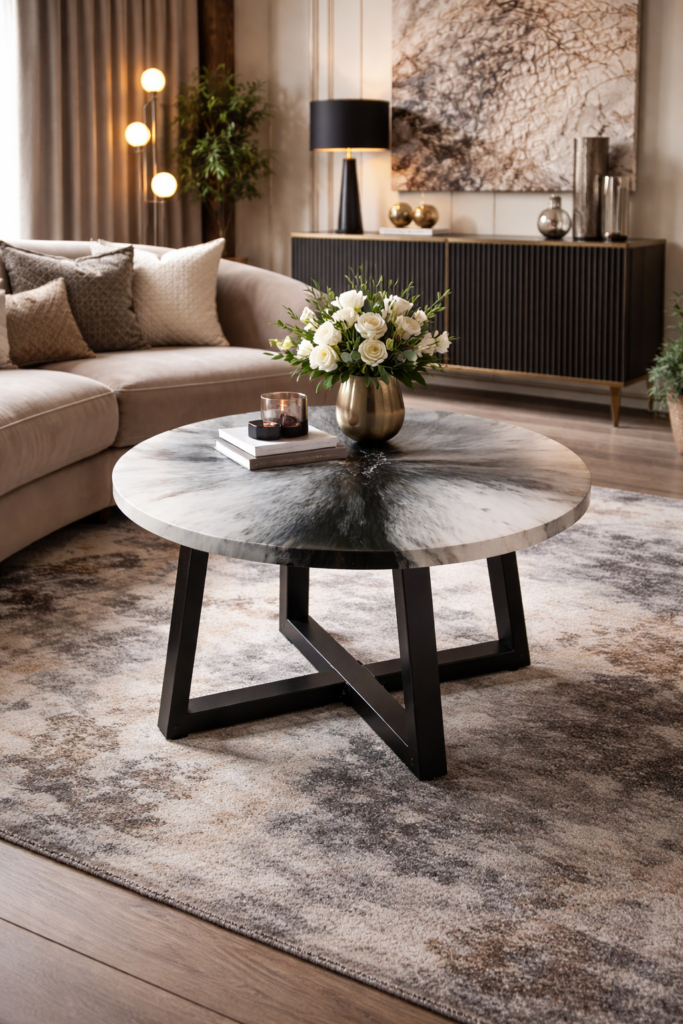
Veined pigment worked while the resin is still moving, producing a surface that reads as stone. It is the most demanding of the four: the veining is created in a window of a few minutes and cannot be corrected, retouched or repeated. Two tables from the same workshop on the same day will not match.
The advantage is that it gives the visual weight of marble without the weight, the porosity or the staining. A marble-effect surface takes red wine and citrus without consequence, which real marble does not — Phantom Marble is built on exactly that trade.
Choose it when: you want the language of stone in a room where real stone would be impractical, too heavy or too fragile.
What the Wood Does to Your Choice
- Walnut — dark and busy. Clear or smoke keeps it legible; white fights it.
- Oak — mid-toned and even. Takes any of the four, which is why it is the safe commission.
- Ash — pale with strong grain. Black or a deep tint gives it the contrast it lacks on its own.
- Elm — irregular and characterful. Clear, always. Anything opaque competes with the figure.
The species themselves are covered in Choosing the Wood.
Two Practical Notes
Colour cannot be changed later. Unlike a wall or a chair, the pigment is inside the piece. Re-polishing restores the surface but not the decision.
Ask to see it in the room’s light. A sample photographed in a workshop under daylight bulbs tells you very little about how it will read at seven in the evening under warm lamps. If you are unsure, clear is the option nobody regrets.
Quick Answers
Which resin colour is most popular?
Crystal clear, by a wide margin — it keeps the wood visible and never dates. It is also the hardest to execute well, which makes it a fair test of a workshop.
Can the resin colour be changed after the table is made?
No. The pigment is set through the depth of the pour. The surface can be re-polished, but the colour is permanent.
Does coloured resin fade?
UV-stabilised resin resists fading for years. As with any clear or tinted material, avoid a position in unbroken direct sunlight — the detail is in our durability guide.
Is marble-effect resin better than real marble?
For a table surface, usually. It is lighter, non-porous and does not stain from wine or citrus, and it can be re-polished if scratched.